Understanding Car Suspension Systems: How They Work and Why They Matter
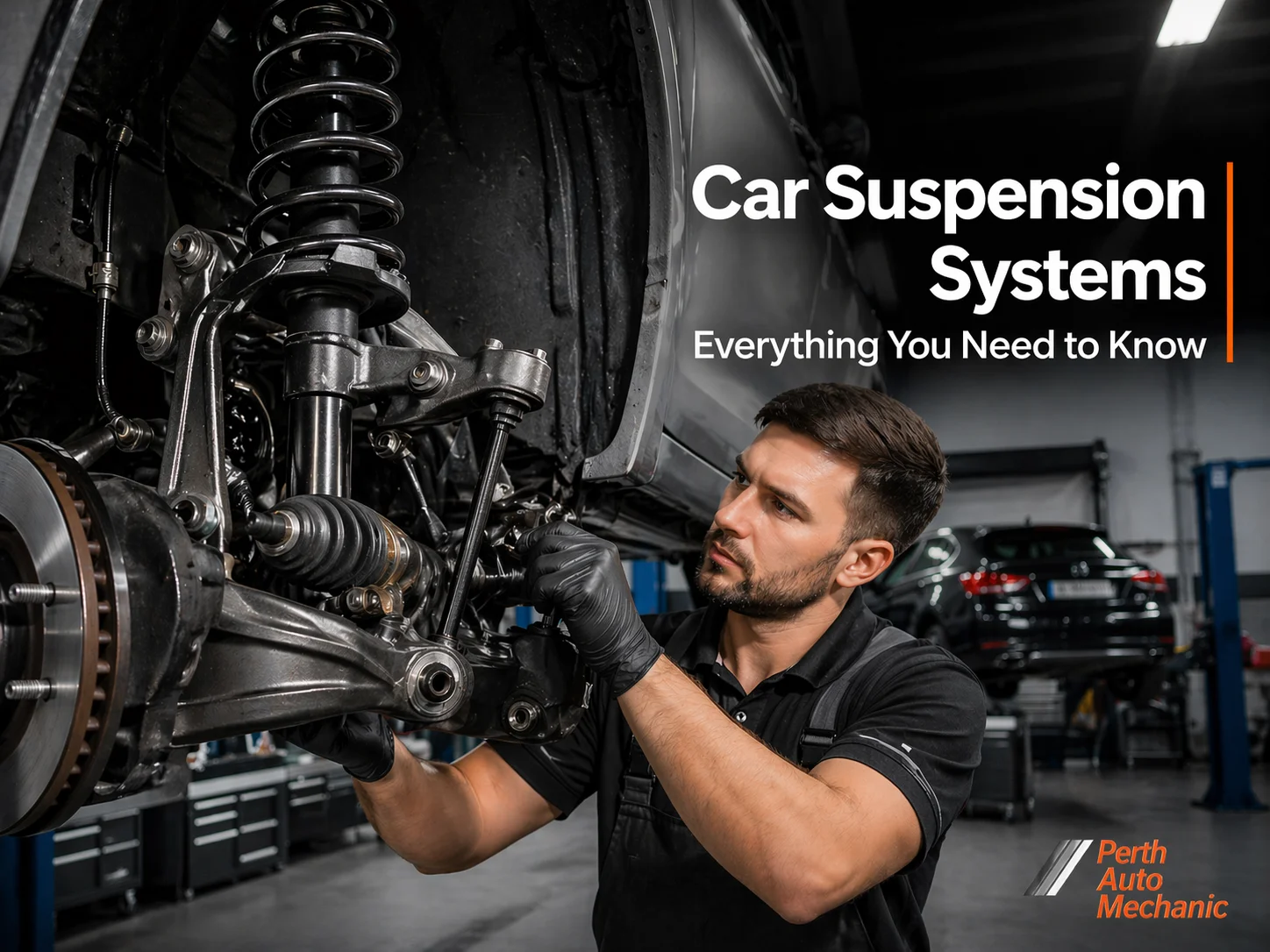
Have you ever felt your car suddenly isn’t as smooth or stable as it used to be? That’s a sign that your car suspension isn’t working properly.
A car suspension system works by using springs to absorb bumps and shock absorbers to control movement, eventually keeping your car’s tyres in contact with the road. Moreover, it is helpful for your car to stay smooth and safe during driving.
In this blog, we’ll take a detailed look at the suspension system in cars, its main parts, and how it works. So stay with us till the end.
What Is a Car Suspension System?
A car suspension system is the set of springs, shock absorbers, and linkages that connect a vehicle’s body to its wheels. It absorbs shocks from road bumps, keeps the tyres in contact with the road, and helps maintain stability, control, and ride comfort.
The job of a suspension system in an automobile is to:
- Absorb shocks from the road
- Support the weight of the vehicle
- keep tyres in contact with the ground
- Maintain stability when driving
Main Parts of Vehicle Suspension
The suspension system is made up of several important components that work together to absorb shocks and keep your ride stable and comfortable.
Springs – The First Line of Defence
Springs handle the initial impact during a bump. Some of the common types include:
- Coil springs (most cars use these)
- Leaf springs (common in trucks)
- Torsion bars (twisting action)
- Air springs (used in premium cars)
Without springs, every bump would feel harsh.
Shock Absorbers and Struts
Shock absorbers control how your car reacts after a bump. They reduce bouncing and improve the comfort of your car. While struts are used in the car’s front suspension system, combining structure and damping into one unit.
Control Arms and Ball Joints
These parts guide how your wheels move.
- Control arms connect the suspension to the car
- Ball joints allow smooth movement and turning
Bushes, Linkages, and Sway Bars
These smaller car suspension parts make a big difference because:
- Bushes reduce vibration
- Tie rods connect the steering
- Sway bars stop the car from leaning too much in corners
How Does a Car Suspension System Work?
When your car hits a bump, energy is created. If nothing controlled that energy, your car would just keep bouncing. Your car suspension handles it in two clear steps.
Step 1: Springs Take the Hit
The spring compresses when the wheel hits a bump. This absorbs most of the shock before it travels into the car.
Step 2: Shock Absorbers Calm Everything Down
After the spring compresses, it naturally wants to bounce back.
That’s where shock absorbers come in; they slow everything down so your car doesn’t keep bouncing.
A good suspension setup makes your car stable instead of shaky because it is constantly managing:
- Up and down movement (compression and rebound)
- Side-to-side movement when turning
- Weight shift during braking
Types of Suspension Systems
Different vehicles use different suspension layouts depending on size, purpose, and performance needs.
Non-Independent Suspension
In a non-independent setup, both wheels on the axle are connected. That means movement on one side can affect the other. This design is strong and simple, which is why it is still used in some heavier vehicles.
Independent Suspension
It is common in modern auto suspension systems. With independent suspension, each wheel moves more freely on its own. That means one wheel can react to a bump without disturbing the other side. This gives a better ride and improved handling. So you can get the following with it:
- Smoother ride
- Better control
- more common in modern auto suspension systems
MacPherson Strut
It is especially common in front-wheel-drive vehicles because it saves space and works well in a tight engine bay. It is compact, light, and cost-effective.
Double Wishbone
In a double wishbone suspension, two A-shaped arms control wheel movement more precisely. It offers
- Better handling
- Less body roll
- Used in SUVs and performance cars
Multi-Link Suspension
Multi-link suspension uses several arms to control wheel movement with more precision. It is more complex, but it can give excellent comfort and handling at the same time.
Front Suspension vs Rear Suspension
Your car’s front suspension system and rear suspension don’t do exactly the same job.
The front handles:
- Steering
- Braking forces
- Most of the road impact
The rear suspension focuses more on:
- Balance
- Stability
- Carrying weight
Importance of a Well-Maintained Suspension System
A well-maintained car suspension system is not just about a comfortable ride, as it plays a key role in how safely and efficiently your vehicle performs on the road. A worn car suspension system impacts:
- Safety
- Braking distance
- Tyre life
- Handling
To understand common issues in detail, read our guide on nine common suspension problems.
How to Maintain Your Suspension System
You can keep your suspension system in good condition with regular care and mindful driving. Try to avoid speeding over bumps, as hard impacts can damage suspension parts over time.
Furthermore, check your tyre pressure regularly and keep wheel alignment in check to reduce uneven wear and stress. Most importantly, don’t ignore early signs like unusual noises or a rough ride. So, to sum it up:
- Get regular checks.
- Fix small issues early.
- Watch for tyre wear.
- Avoid hitting potholes hard.
Get Your Vehicle Back on the Road with Perth Auto Mechanic
At Perth Auto Mechanic, our goal is to keep your vehicle safe and running smoothly without any hassle.
We handle everything from logbook servicing and engine or gearbox repairs to electrical diagnostics, CV joints and shafts, as well as SUVs, 4WDs, and both light and heavy vehicles.
Just give us a call for help with steering and suspension. It’s part of our daily work, so your car will be in experienced hands.
Book Your Suspension Service Today
FAQs
How does a suspension system work?
A vehicle suspension system uses springs to absorb impact and shock absorbers to control movement and maintain tyre contact.
What are the main car suspension parts?
Key car suspension parts include springs, shock absorbers, struts, control arms, ball joints, and sway bars.
What are the signs of bad suspension?
Common signs of bad suspension include bouncing, uneven tyres, noise, poor handling, and a rough driving feel.
How often should suspension be checked?
The suspension system in an automobile should be inspected every 20,000 km or when issues start to appear.